Apaixonado por novas descobertas, sempre estou buscando por novas experiências, sou um eterno aprendiz, com alma de empreendedor sempre busco por novos desafios e procuro novas maneiras de obter uma renda extra extra através da internet, adoro marketing em geral e sempre procuro passar para os leitores que me acompanham o melhor conteúdo.
De acordo com o relatório de 2020 do Marketing de Conteúdo B2B, 48% dos profissionais de marketing desejam se concentrar em melhorar a qualidade e a conversão de seu público. Para fazer isso, 39% aumentarão os gastos na criação de conteúdo B2B. Mas produzir o máximo de conteúdo humanamente possível ajudará a atingir esse objetivo? Não necessariamente.
Produzir X quantidade de postagens por mês pode satisfazer suas metas no papel, mas geralmente faz com que você priorize a realização do trabalho em detrimento do bom trabalho. Quando a quantidade supera a qualidade, todos perdem. Sua equipe trabalha muito com o conteúdo que não funciona, e as pessoas com quem você está tentando se conectar não obtêm o conteúdo que merecem.
Se você deseja que seu conteúdo seja realmente bem-sucedido, precisa se concentrar em dar às pessoas o que elas precisam. Tradução: concentre-se em fornecer valor.
Um bom conteúdo B2B é uma narrativa que desperta o interesse das pessoas e as atrai. Fornece insights, inspiração ou ideias interessantes, oferece algo significativo. Obviamente, apresentar esses tipos de ideias de conteúdo pode ser um desafio, especialmente quando você se sente atraído de forma criativa.
Felizmente, podemos remediar isso. Por fim, as pessoas não se importam que você esteja fazendo marketing. Elas se importam que você esteja pensando neles. Para criar conteúdo de qualidade que ressoe, você precisa de ideias que colocam as pessoas em primeiro lugar. Se você está tendo problemas para fazer um brainstorming, aqui estão maneiras de encontrar boas ideias e impulsionar sua criatividade.
1. DIGA O QUE NÃO ESTÁ SENDO DITO
Um dos maiores desafios que os profissionais de marketing B2B enfrentam é se destacar por meio do conteúdo. Mas muitas vezes escrevem sobre as mesmas coisas ou imitam os líderes da indústria e simplesmente aumentam o ruído. Uma maneira inteligente de remediar isso é preencher as lacunas de mensagens em torno de um assunto, adotar um ângulo único ou introduzir uma ideia que outros ignoraram.
Você ainda pode buscar inspiração nos líderes, mas procure as entrelinhas. Leia o que os outros estão escrevendo em seu espaço e pense em maneiras de preencher a narrativa com diferentes ângulos. Leia também os comentários para ver o que as pessoas estão pensando ou se perguntando. Suas perguntas podem inspirar uma grande parte do conteúdo B2B.
Você também deve procurar por falhas de mensagens no conteúdo B2B existente.
2. ATUALIZE SEU CONTEÚDO MAIS POPULAR
Os profissionais de marketing geralmente se concentram em gerar cada vez mais conteúdo, acompanhando as novidades, as tendências e o que os outros estão fazendo. Essa abordagem significa que você está efetivamente criando conteúdo apenas para acompanhar os populares. Mas, como discutimos, o conteúdo sem qualidade não é eficaz.
Audite seu conteúdo existente. Identifique quais postagens ou artigos foram mais bem-sucedidos e pergunte-se como você pode torná-los melhores. Adicione informações adicionais aos seus artigos com melhor desempenho, crie partes maiores de conteúdo B2B (por exemplo, transforme uma postagem em um e-book) ou produza sequências. Essa é uma maneira inteligente de impulsionar o SEO em blogs antigos populares – e uma ótima estratégia de baixo risco para envolver os leitores enquanto capitaliza em sucessos anteriores. Você também pode redirecionar o conteúdo existente, dividindo-o em partes menores (por exemplo, infográficos, mini-guias ou microconteúdo).
3. PERGUNTE AS PESSOAS O QUE ELAS PRECISAM NO SEU CONTEÚDO
O maior erro que você pode cometer em um brainstorming é perguntar: “Sobre o que queremos escrever?” Isso é míope, pois não considera as pessoas que consumirão seu conteúdo. Além disso, não basta pensar no que as pessoas querem. Para agregar valor real, você deve pensar no que as pessoas precisam.
Para agregar valor real, você deve pensar no que as pessoas precisam. A maneira mais simples de saber o que as pessoas precisam é ir direto à fonte. Pergunte diretamente ou pense nas perguntas que eles estão fazendo para você (e seus concorrentes). Verifique os comentários em seu blog, os blogs de seus concorrentes ou publicações do setor para descobrir essas perguntas e converse com sua equipe de vendas.
Para envolver as pessoas diretamente, faça perguntas por e-mail, chamadas, conferências, pesquisas e reuniões. Armazene essas informações para garantir que sua equipe tenha as informações mais recentes. Esses tipos de conversas são inestimáveis para ajudá-lo a gerar ótimos tópicos para todos os ângulos.
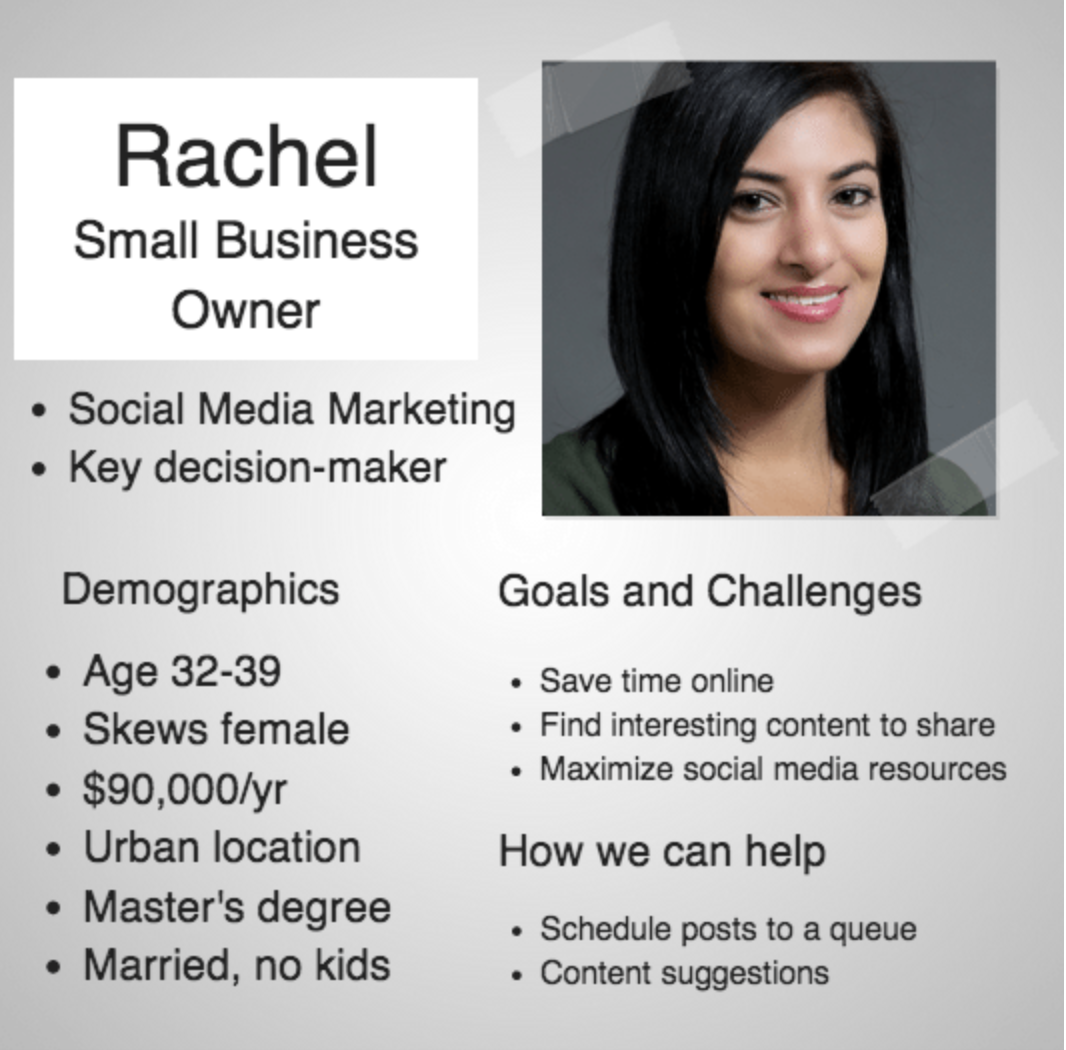
Se você ainda não o fez, crie personas de marketing para entender melhor os diferentes tipos de pessoas para quem você está criando conteúdo. Personas são uma ferramenta especialmente útil para avaliar suas ideias daqui para frente. Você também pode se inspirar nesses ótimos exemplos de marketing de conteúdo empático.
4. COMPARTILHE SUAS VITÓRIAS
Isso não significa que você deva se gabar de como você é ótimo ou de quantos prêmios ganhou; significa que as ideias e descobertas que ajudaram você também podem ajudar outras pessoas. Você implementou uma nova estratégia para um sucesso impressionante? Você aprendeu um truque útil, solução alternativa ou dica que tornou sua vida muito mais fácil? Esse tipo de conhecimento é tremendamente valioso para os outros.
Pense em seus sucessos recentes e considere como você pode convertê-los em conteúdo útil, como guias, listas de verificação, estudos de caso ou modelos. Apenas certifique-se de enquadrar as coisas de maneira construtiva. Nessa nota, observe o seu tom; você quer ser sincero e compreensível – não condescendente.
5. COMPARTILHE SUAS FALHAS EM SEU CONTEÚDO
É natural querer focar nos seus sucessos mais do que fracassos. O fracasso é humilhante, mas faz parte do que nos torna humanos. Por esse motivo, o fracasso pode ser incrivelmente valioso se ensinar alguma coisa. Como Nelson Mandela disse: “Eu nunca perco. Eu ganho ou aprendo.”
Pense nos principais desafios que você enfrentou e como os enfrentou, ou o que aprendeu ao assumir um risco que não deu resultado do jeito que você queria. Você não precisa se espetar publicamente. Apenas se concentre nas sugestões significativas que a experiência deu a você.
Por fim, um dos maiores mandamentos de marketing de conteúdo deve ser “Respeite o tempo dos seus leitores”.
Entretanto, somos pessoas ocupadas vivendo em um mundo ocupado, e a última coisa que alguém precisa é de uma marca que crie mais barulho. Em vez disso, pense em como você pode fornecer informações em um pacote sucinto, simplificar uma ideia complexa ou facilitar as coisas para elas. Este é um serviço valioso por si só.
But what if you don’t have the time to go through a 21-part training series? Or what if my SEO tool doesn’t give you the step-by-step instructions you need?
What other options do you have?
Well, today I thought I would make your life easier by sharing 21 of my own SEO and content marketing worksheets and templates to help you get higher rankings in less time and, best of all, with less effort.
Marketing definitions
Let’s start off with the basics.
In marketing, we all use terms that might be a bit confusing.
Or more complicated ones like CAC, BANT, LTV, or even NPS.
I’ve created marketing acronyms glossary that breaks down what each marketing acronym stands for and what it means.
So, when you are reading any marketing blog or book, you’ll now know what these “unusual” acronyms and words mean.
Local SEO
If you want to rank for local-based terms, it’s not just about optimizing for keywords. There’s much more to local SEO and a lot of it has to do with your landing page.
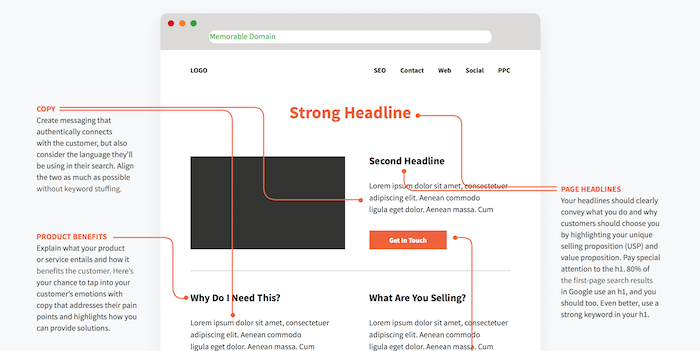
Here’s a template that breaks down the anatomy of an optimized local landing page.
What’s cool about this template is that it breaks down the percentage of impact each element will have when it comes to your SEO.
Keyword research
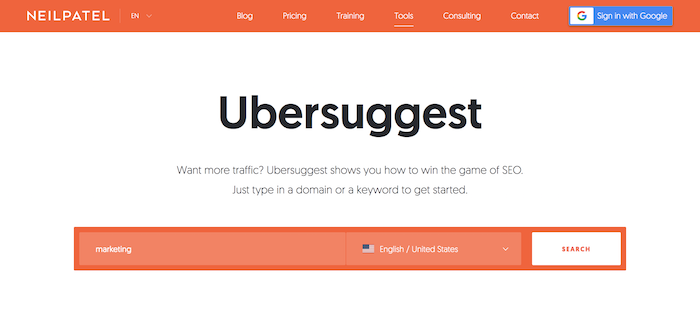
The easiest way to find keywords is to use tools like Ubersuggest.
Just type in a keyword…
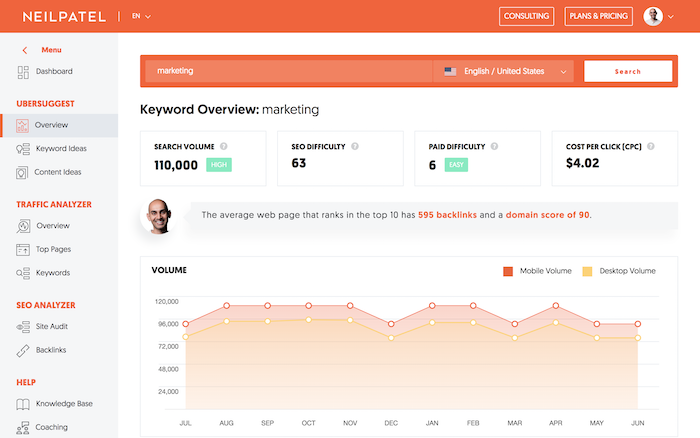
You’ll see a report that looks like this…
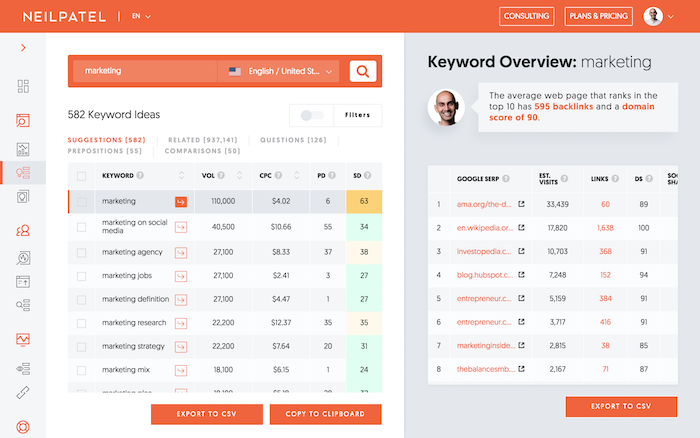
Then click on “Keyword Ideas” in the left-hand navigation.
But as you go through the list of thousands of thousands of keywords, how do you know which ones are valuable?
Sure, in general, if a keyword has a high “volume” it means it is searched a lot, which is good. And if it has a high “CPC” it means that advertisers are willing to spend a lot to advertise on that keyword, which again is good because it typically means that the keyword drives qualified traffic that causes purchases.
And if a keyword has a low SD (SEO difficulty) that’s great as well because it means the keyword is easier to rank for.
When looking for keywords, ideally you want ones that meet all 3 of those requirements.
But just because a keyword doesn’t meet all of those 3 requirements doesn’t mean that it isn’t good for you and your strategy.
There’s actually a lot of hidden gems out there that don’t meet all of those requirements because marketers don’t know they are lucrative.
So to help you find the best ones, I’ve created a 220 profitable keyword cheat sheet. It breaks down keywords that have buyer intent for all industries.
Now, I want you to go back to Ubersuggest to perform a keyword search and look for keywords that contain some of the phrases within my profitable keyword cheat sheet. Those are keywords you’ll want to target.
Seriously, just spend 5 to 10 minutes hunting for keywords. Perform at least 10 searches and you’ll find some gold.
As you are doing the keyword research, you’ll find that it may be difficult to remember and keep track of all the amazing keywords you are finding, which leads me to the Ubersuggest keyword planner spreadsheet.
You can use it to keep track of the keywords you want to focus on first, second, third…
Trust me, it will make your life simpler.
SEO factors
There are over 200 factors in Google’s algorithm.
But let’s face it, you aren’t going to optimize for each of them because it takes too much time.
And even if you have the time, where do you start, and which ones do you fix first?
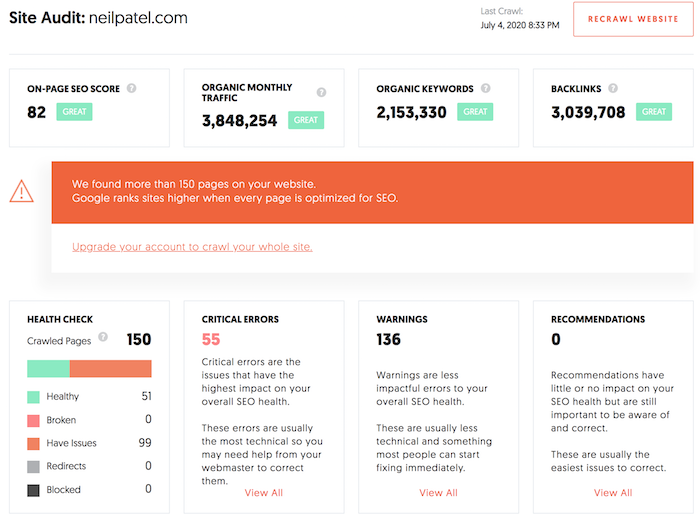
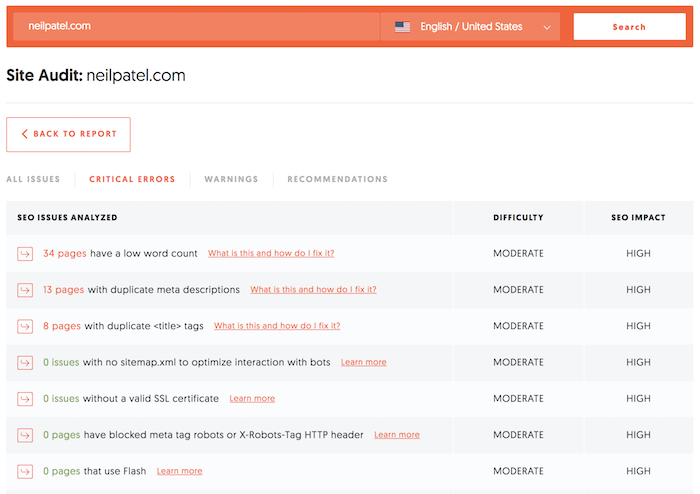
And if you click on any of the error boxes, it will break down what to fix in order.
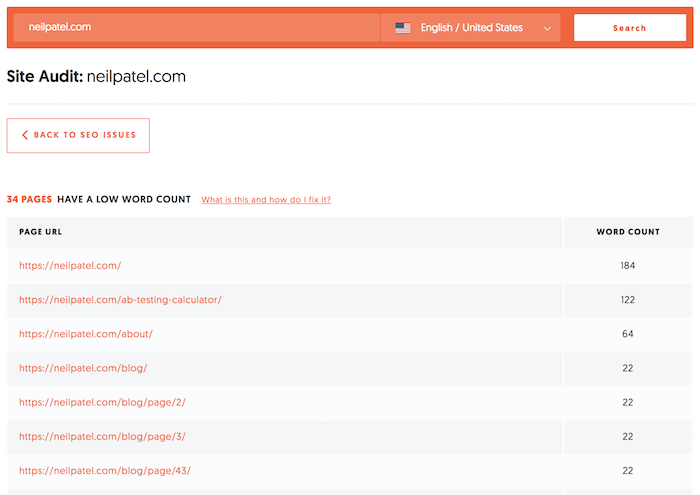
You can then click through and get details for each SEO error.
And although I highly recommend that you fix your errors in the above report (it’s a great way to boost your rankings), you don’t want to just keep playing defense.
You want to start playing offense with your marketing and make sure that you are doing things right as you release new pages or make changes to your website.
So I’ve created an SEO factors cheat sheet that breaks down important factors that you need to think about when creating new pages on your site.
It’s great to pass along to your team members and your content writers as well (and even your developers!) so you can make sure that everyone is on the same page.
And don’t worry, it doesn’t break down all 200 factors as that would be too overwhelming… it focuses on the important ones that you need to get right from day 1.
But if your team does want something more detailed, I’ve also created a thorough SEO checklist that is 20 pages long.
Anytime my team is doing major changes like a redesign or change our site structure, I make sure that they go through that checklist as it helps ensure we at least maintain our rankings if not increase them.
Supercharging your content
Content marketing is a key ingredient to more search traffic.
But these days, there is so much content on the web. How do you make sure that your content stands out and ranks?
But of course, you probably don’t have the time, resources, or team to do the custom research we did.
So how do you create content that contains data, amazing insights, and research that people love? Well, I’ve created a data sources document that you can use to easily find all of the information I just mentioned.
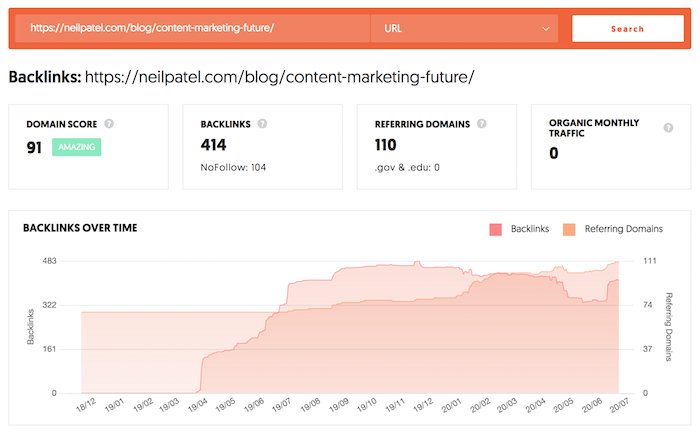
It will break down sites that contain unique data, charts, and research that you can cite within your content so you can naturally build more backlinks like me.
And on top of that, if you really want to supercharge your content and make sure that it not only drives traffic but more importantly sales, here are a few more templates and worksheets I’ve created for you:
WHIPS – the WHIPS template breaks down the cycles people go through before they purchase. Such as someone could be a window shopper, in which they are interested in purchasing something, but maybe not from you. Or they may know that they have a problem and are just looking for the right solution. No matter what situation your potential customers are in, the WHIPS template breaks down each of them so you can create the appropriate content that fits their needs.
20/20 Rulebook – whether it is you who writes your own content or if you have writers, have them follow the 20/20 Rulebook. It breaks down the 20 rules that your content needs to follow if you want it to do well. Now in many cases, you won’t follow all of them, but your goal is to get as close to 20 as possible.
Content creation template – if you want my framework to write blockbuster blog posts, follow the content creation template. It’s a 20-page process, but once you use it a few times you’ll quickly get the hang of it and find that it’s easy to remember. And I’ve found that when people use it to write 6 blog posts, by the 7th they don’t even need to look at it because they know the steps by heart.
Content editing
I know my content has grammatical and spelling errors every once in a while, but my content does well.
One of the reasons is I follow the templates and worksheets that I’ve mentioned above.
But it is because I put a lot of emphasis on editing.
See, once you write content, let it sit for a day. It will give you time to think about how it can be made better.
And the next day, you’ll want to go in and edit it.
Don’t worry, editing doesn’t have to take a lot of time… I’ve broken down our editing hacks into 3 worksheets:
10 Commandments – this worksheet breaks down the 10 things to look for when editing. If you are short on time, start with this worksheet because you can typically get your editing done in less than 30 minutes by following the steps.
Editing checklist – and if you have someone dedicated to editing on your team, have them complete this checklist each time they edit any content.
Step-by-step editing guide – for those of you who really want to master editing, here is a 27-page guide that breaks down each step of the editing process. I’ll be honest with you, it is a bit overkill, but it is great if you have someone dedicated to just editing.
You may find the editing process a bit overwhelming, and if that is the case, stick with the checklist or the 10 commandments.
You can also use this editorial calendar to help you out. It is an Excel file, but you can load it up using Google Sheets for free.
Fine-tuning your content
Whoever says editing is the last step of content marketing is lying.
Going the extra mile by fine-tuning little things and making those small tweaks is what can help your content go viral.
Look, no matter how good of a marketer one might be, you will make mistakes. Even if you make very few, there is always room for improvement.
If you have already published hundreds (if not thousands of blog posts), don’t worry. You can tweak them still.
So, lets fine-tune your content to get that extra traffic.
Every little bit adds up, right?
It’s how I grew my SEO traffic to over 4 million visits a month:
Headline formula – as David Ogilvy once said, you spend 80 cents on the dollar in the headline. And it’s true, 8 out of 10 people will only read your headline, but only 2 people will click through and read the rest of your copy. So follow this headline formula swipe file to create amazing headlines.
Constructive criticism – having the attitude that you can always get better will help you beat your competition. The moment you think you know it all is the moment you lose. This worksheet will teach you how to critique your own content without being biased. I love using it to critique my competitions’ articles as it helps me better understand how to beat them.
WordPress SEO cheat sheet – you’re probably using WordPress like me. And if you are, fine-tune your blog with this cheat sheet. It’s an Excel file, but you can use Google Sheets to open it up.
Don’t forget to build links
Link building sucks. But if you don’t build links, you won’t rank well.
I wish there was another way… but there isn’t. 🙁
As you are building links you may be wondering, am I building the right links or the wrong links?
Are my existing links good? Do I need to disavow any of them?
For this reason, I’ve created a link-building scorecard. You can use Google Sheets to view it.
It will help you keep track of your links, which ones are good or bad, and what you need to fix so that you can reduce your risk of a Google penalty.
Once you download the link building scorecard, you’ll also want to download these two worksheets:
Link building search operators – this worksheet teaches you how to use advanced search parameters within Google to find new link building opportunities. It is simple yet very effective.
Outreach templates – once you find link opportunities, you’ll have to send outreach emails to convince sites to link to you. Here’s my outreach template. It contains 24 pages of outreach emails that you can use to build more links.
Conclusion
I know I’ve given you a lot of templates, worksheets, and cheat sheets, but you don’t have to use them all.
Use the ones you need and just save the rest for later. It will make your life easier, helping you get results faster and in less time.
And if you are wondering how much time you should spend on each task, here is the SEO taskmaster worksheet.
It breaks down all of the SEO tasks you need to complete, how long each will take, the importance of each one, and how to prioritize them because there is no way you can do everything in one day.
So, what do you think of all of these templates? Are you going to use them?And what has worked for you that I didn’t discuss here?
There are a number of things you can do to ensure your readers are enticed by your landing page and want to know more information.
In this post, we’re going to figure out exactly what you need to do to produce a mind-reading landing page. But first, let’s start with the basics.
What is a landing page?
Before you create a landing page, you need to understand exactly what it is.
A landing page is a dedicated web page, often called a squeeze or splash page. The objective is to collect your visitor’s data through a lead capture form.
You might use a landing page to give away a free e-book, webinar, or course in exchange for your audience signing up for your email list.
Or maybe you collect emails before launching your new website.
The best part about a landing page is that it’s only one page.
It’s one page you need to optimize.
Why, then, do so many people make mistakes with their landing pages?
And why do so many people struggle to convert their customers?
A well-crafted landing page will enable you to target a specific audience, create a compelling message, and increase conversions.
But what goes into creating an effective one?
What makes some landing pages successful and some fall flat on their face?
It all comes down to whether you know your audience or not.
Those who know their audience will be able to create the right messaging, hold their audience’s attention, and come up with a mind-reading landing page.
But just how do you do that?
Let’s find out.
1. Create a persona
It all begins with creating your ideal persona. When you know who you’re targeting, you will be better equipped to create a landing page that resonates with them.
Your personas should be your ideal target audience. After all, if the right people aren’t visiting your landing page, you will never convert in the first place.
Your personas should include demographic information like where they live, their ages, and their genders.
But they should go further than that.
If you want to create a mind-reading landing page, you need to know what inspires your ideal personas and what they hope to achieve.
You must find out their opinions and how they feel towards specific ideas.
When you do this, you’ll able to position your offer to them so that it’s irresistible.
If you already have a landing page that you’re looking to improve, ask yourself whether or not as a visitor you would take the desired action.
If the answer is no, then there are changes you need to make.
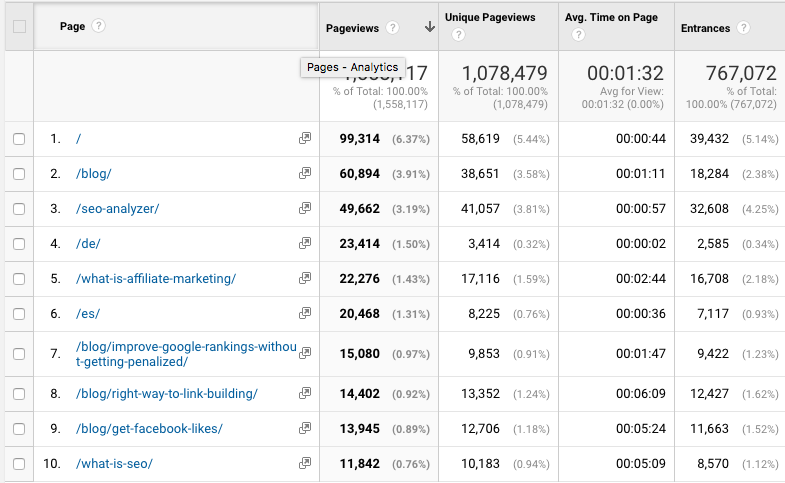
If you’re struggling to create an offer, but you know you want to build your email list with a landing page, then look at your most popular piece of content.
We can see here that the most popular piece of content on my blog is [enter content].
If you were to offer this content as a downloadable PDF or checklist, people would be likely to give you their email address in exchange.
Why?
Because you already know it performs well. You have proof there’s a need for it.
Here, the hard work is done for you. Find a popular piece of content, find a way to repackage it as a downloadable piece, and offer it to your audience.
But what if your landing page isn’t for an e-book, checklist, or downloadable PDF?
Think about other ways you can provide value to your audience.
3. Write the headline
Once you’ve got your offer down, you need to start working on the headline. The headline must be captivating.
It’s usually the first thing your visitor will see, so you need to perfect it.
The headline is often the deciding factor of whether or not a visitor will convert. And you only have one real opportunity to make it work.
Your headline should be driven by the benefits. You need to outline exactly what will happen to the visitor once they take your desired action.
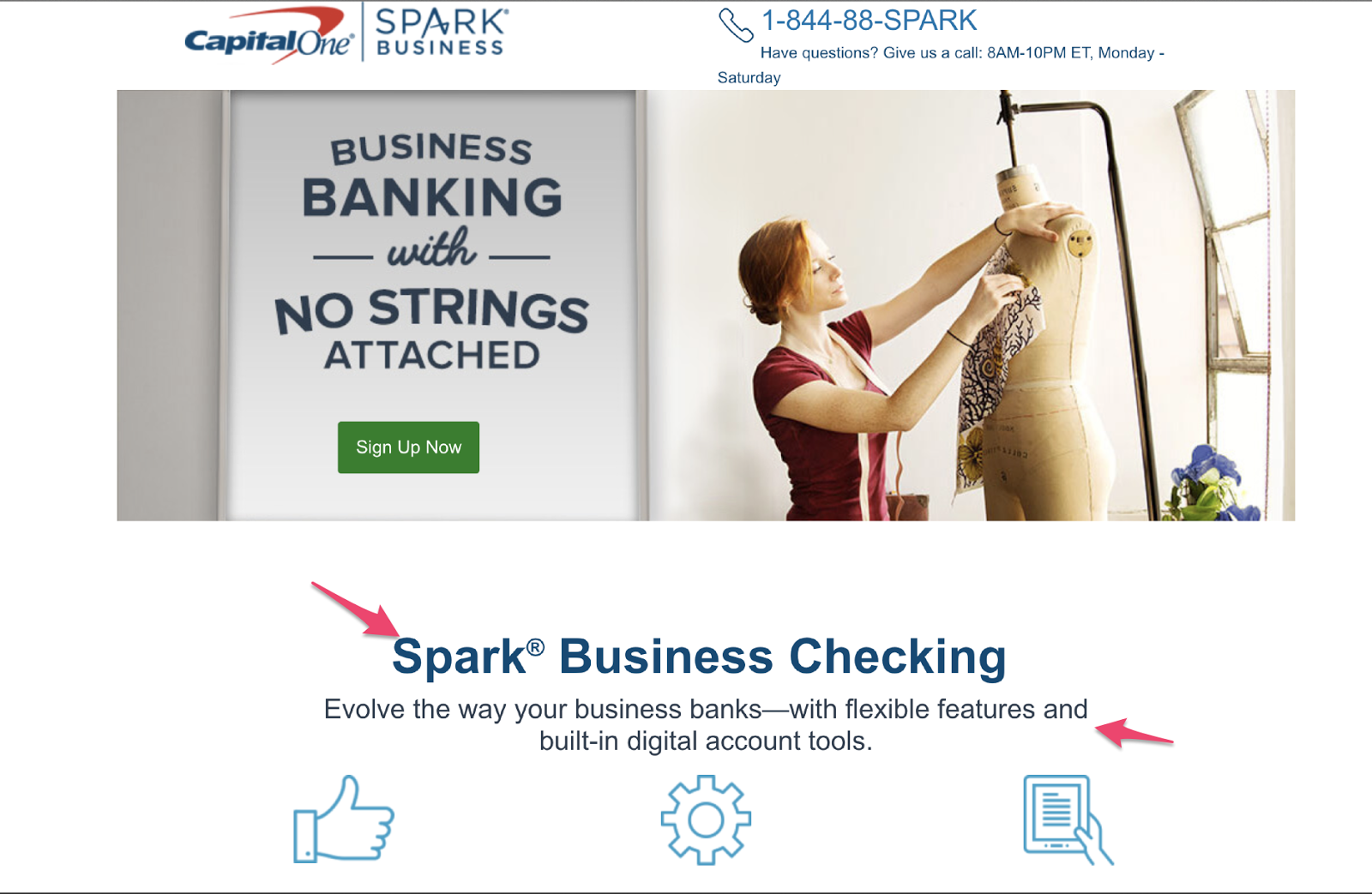
Capital One makes use of both a heading a subheading to get their point across:
They know people who are interested in their service are going to want to have their business in order, so they position their offer in that sequence.
This headline is great because it grabs the audience’s attention. They’re immediately drawn to it. Visitors automatically know what will happen if they fill in the form on the right.
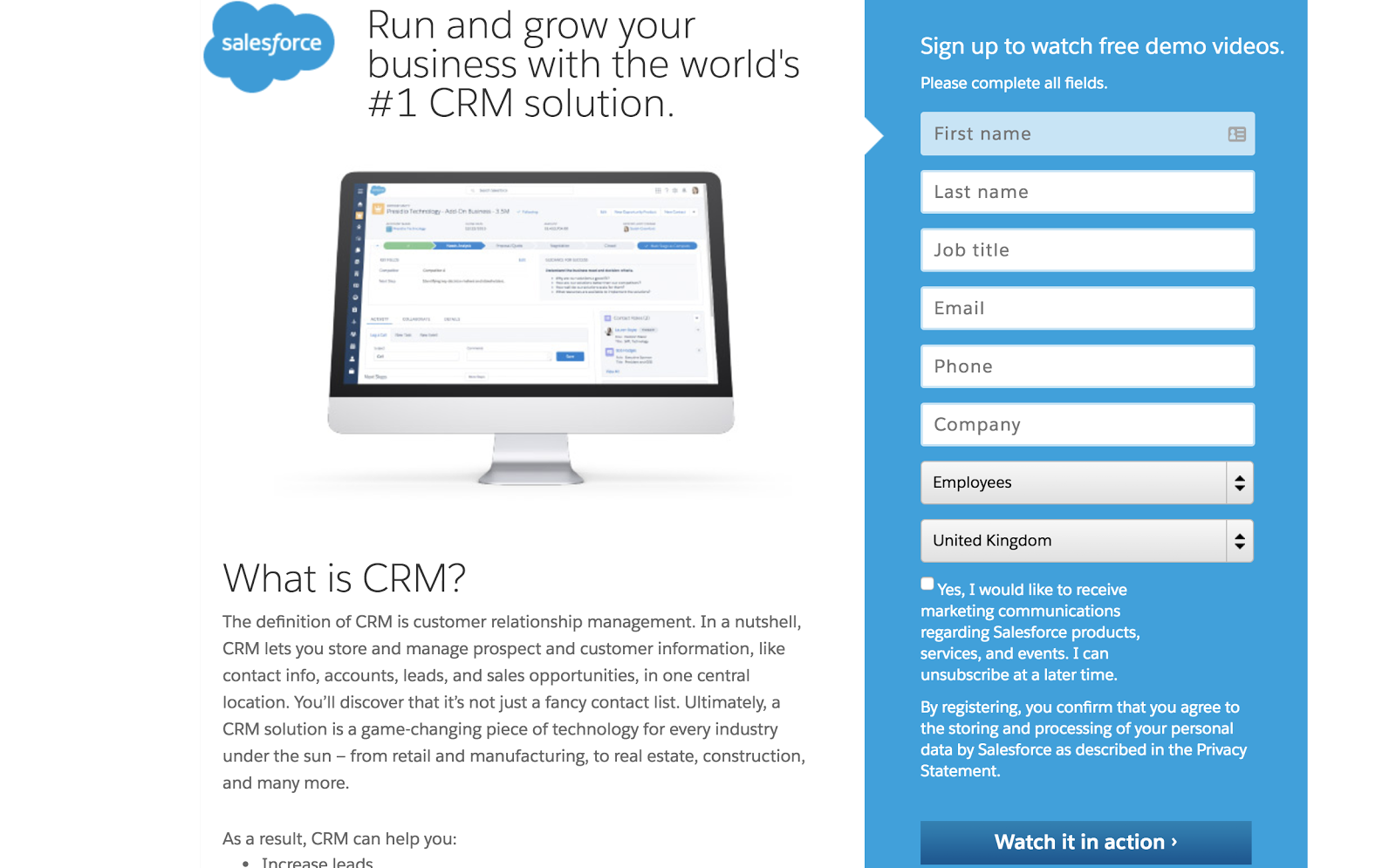
Because if you use your audience’s own language in your headline, it will resonate better with them.
After the headline, you’re likely going to use a subheading.
This is another opportunity to mention the benefits. It’s for people who were compelled by the headline but need some more convincing.
It gives you another chance to keep their attention and draw them closer to your call to action.
4. Create the copy
Good copy sells. You know that. It’s why some companies pay copywriters thousands to put words on a page.
But it’s not as easy as just writing words on a page. They have to mean something to your target customer.
As we mentioned with the headline, if you’re struggling to find words, then utilize the language your prospects use.
Your copy is there as a tool to help you get your point and message across and increase the chance of conversion.
It all begins with finding the sweet spot for the right amount of copy. Write too little and you won’t have enough words to get your point across. But write too much and the page will become overwhelming.
However, just saying “find the sweet spot” doesn’t help you.
In general terms, the amount you write depends on the offer. For things that need a lot of explaining and persuading, you’re going to need more copy.
For things that require the prospect to provide you with more than just their email address, i.e. when they are making a purchase, you are naturally going to need to use additional copy to ensure all the necessary details are there.
When it comes to actually writing your copy, you should mirror your brand’s style.
Keep in mind that it’s not about you. It’s about the customer, so the phrasing you use should be customer-centric and focus on them.
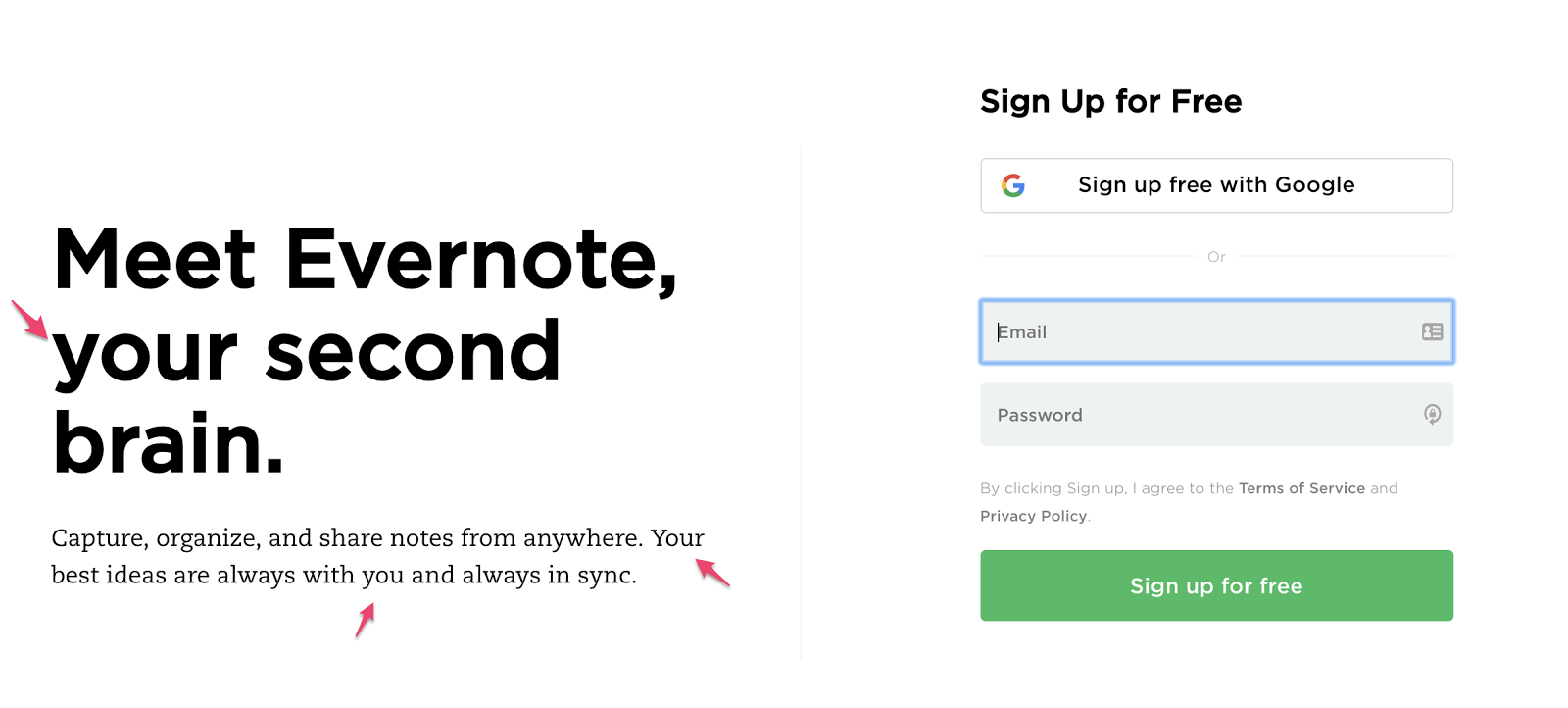
Evernote personalizes their landing page copy by avoiding using words like “we” or “our” and instead opts for words like “your” and “you”:
These words highlight to your prospects that the main reason for this landing page (and your business) is to help them solve their problems.
5. Use visual aids
Like we said, your landing page is only one page, so everything should be there for a reason and have a purpose. The same rule applies to any images or videos you use.
When you’re adding images to your landing page, you should utilize ones that help your visitors visualize their life after they’ve taken your action.
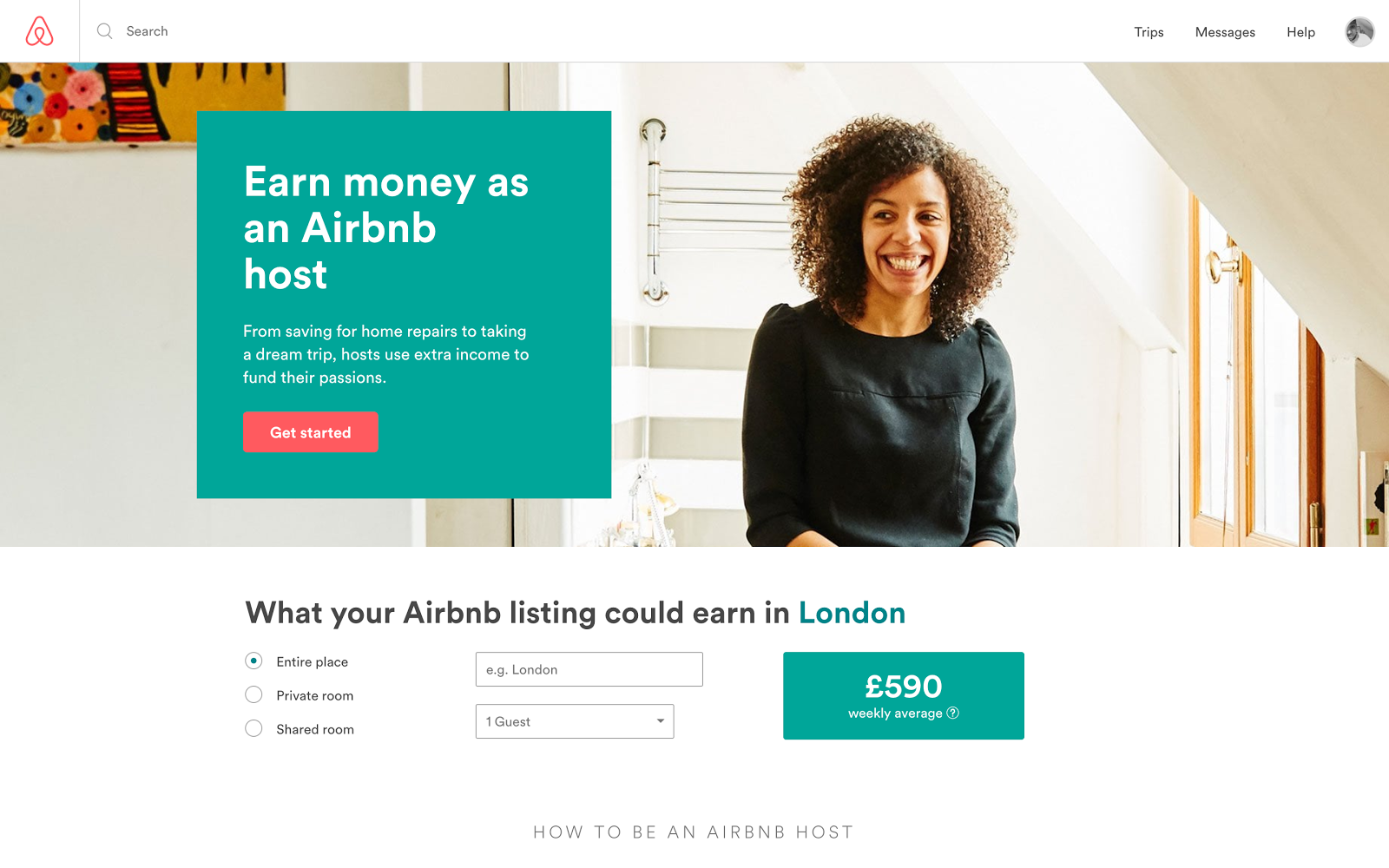
Airbnb is a business that focuses on people. So it makes sense that they should use images of people on their landing page:
They want their users to feel accomplished and happy if they sign up as an Airbnb host, so they include an image of a woman smiling.
For anyone thinking about signing up for the Airbnb platform, seeing an image like this will encourage them it’s a good idea.
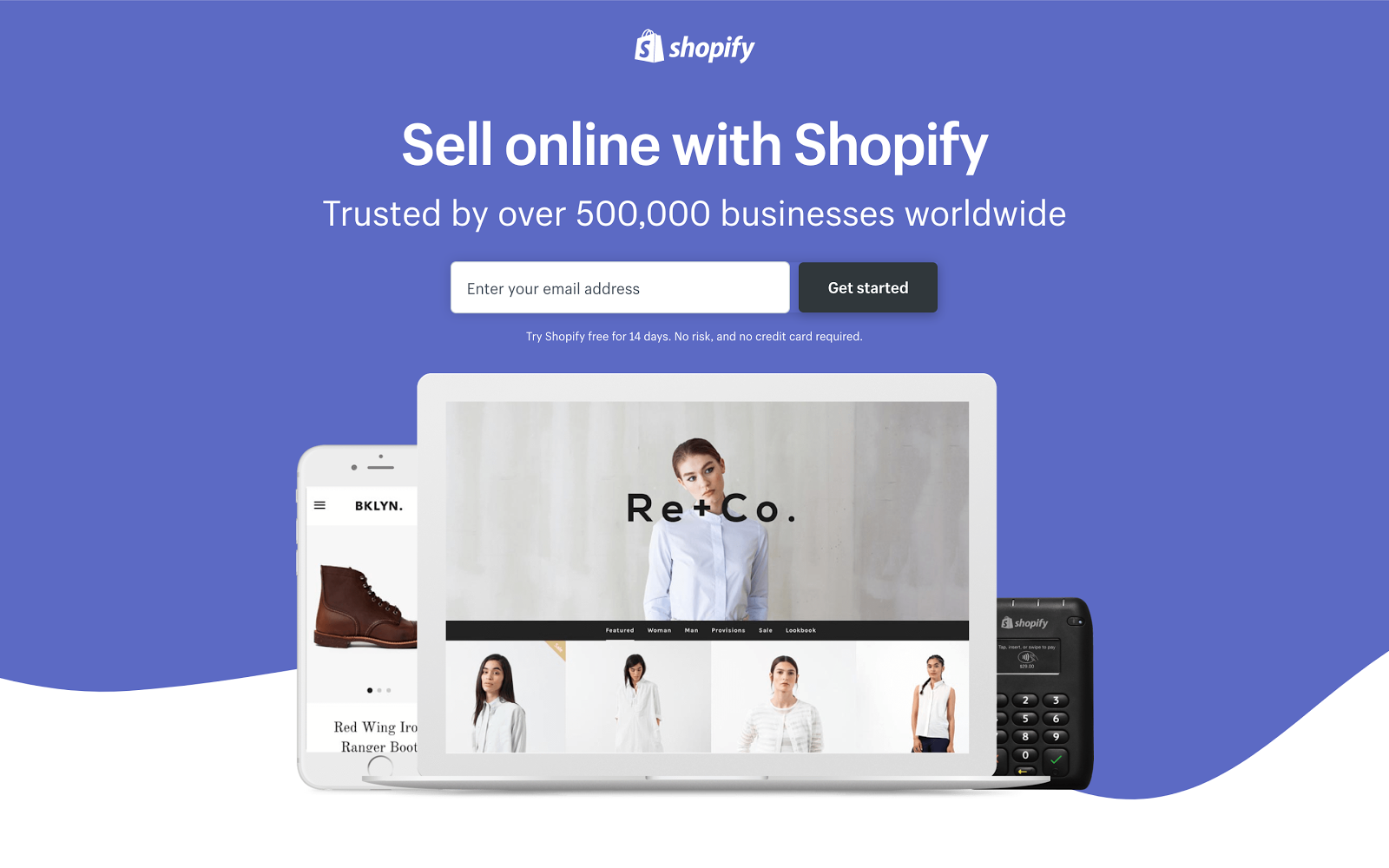
Shopify, an e-commerce platform, uses images to show visitors how their shop could look:
You can utilize images to guide your audience towards the call to action.
The images make your offer more human.
Your audience cannot touch or hold your product. Your landing page should make use of images to help them visualize it.
6. Include social proof
When creating a mind-reading landing page, understand that one question your audience will have is, “Do I need this?”
This is true for every landing page.
One way to read their minds is to address their question through the concept of social proof.
People are more inclined to take action if they know other people just like them have taken action and benefited from it.
Using social proof on your landing page provides prospects with another layer of trust. They feel like it’s more likely your product/service will actually do what you say it will because they can see what other people thought about it.
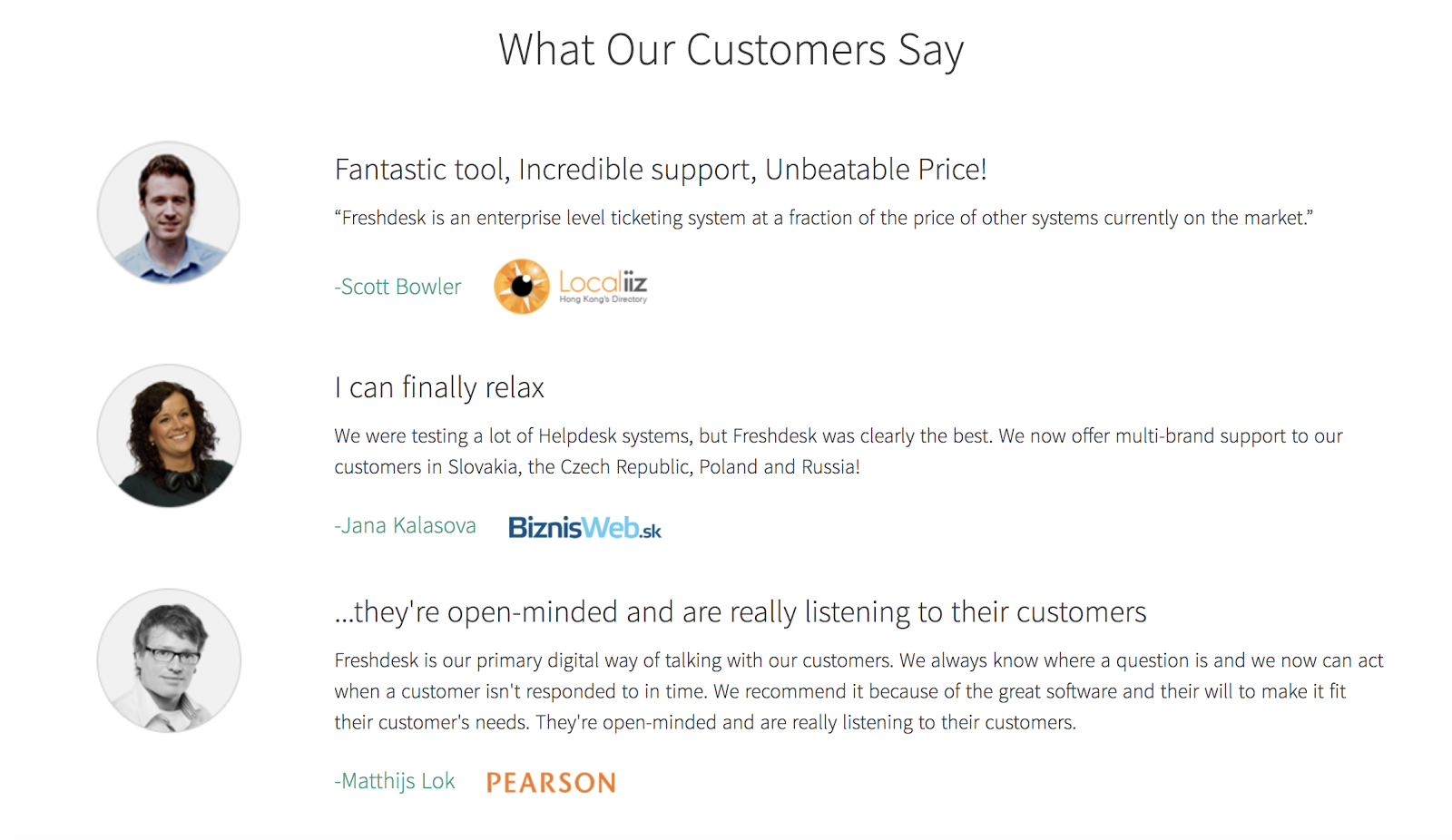
For example, check out what Freshdesk does on their landing page:
Do you have reviews and testimonials for your product you can use on the landing page?
Visitors get to experience how their life could be different from signing up. And they learn that from other people just like them.
7. Utilize a call to action
Your call to action button is important. It’s perhaps the most important element on the page.
If your audience can’t see your button clearly, they’re not going to know what to do.
Each landing page should have a call to action. The call to action is there to guide your user’s attention.
Let’s talk about your call to action button copy.
Your button copy should be action driven and relate to the offer available.
“Download” copy on the call to action is vague, and the visitor might not even remember what it is they’re downloading.
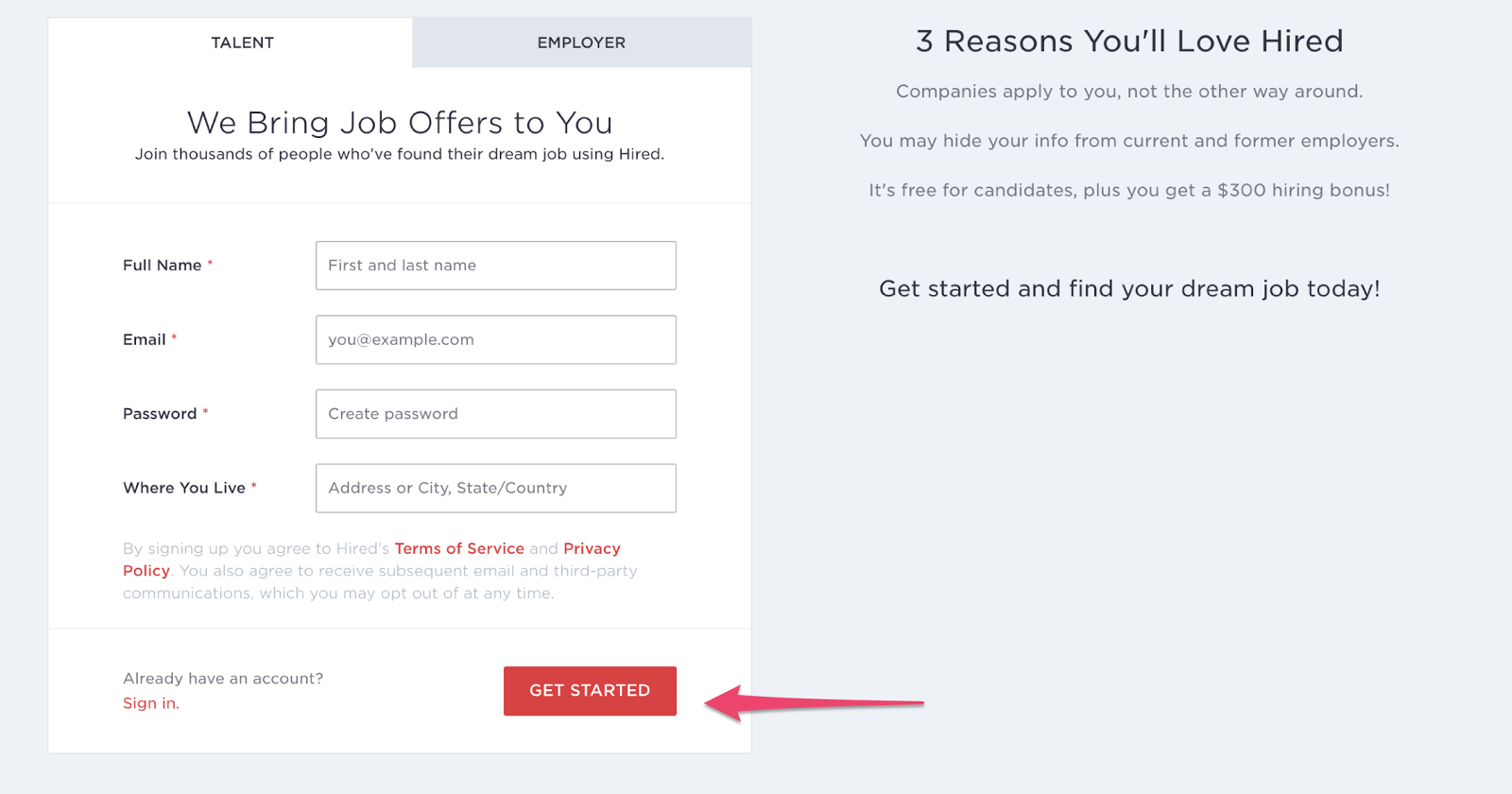
Take a look at the call to action button on Hired. It stands out as the only red button on the page:
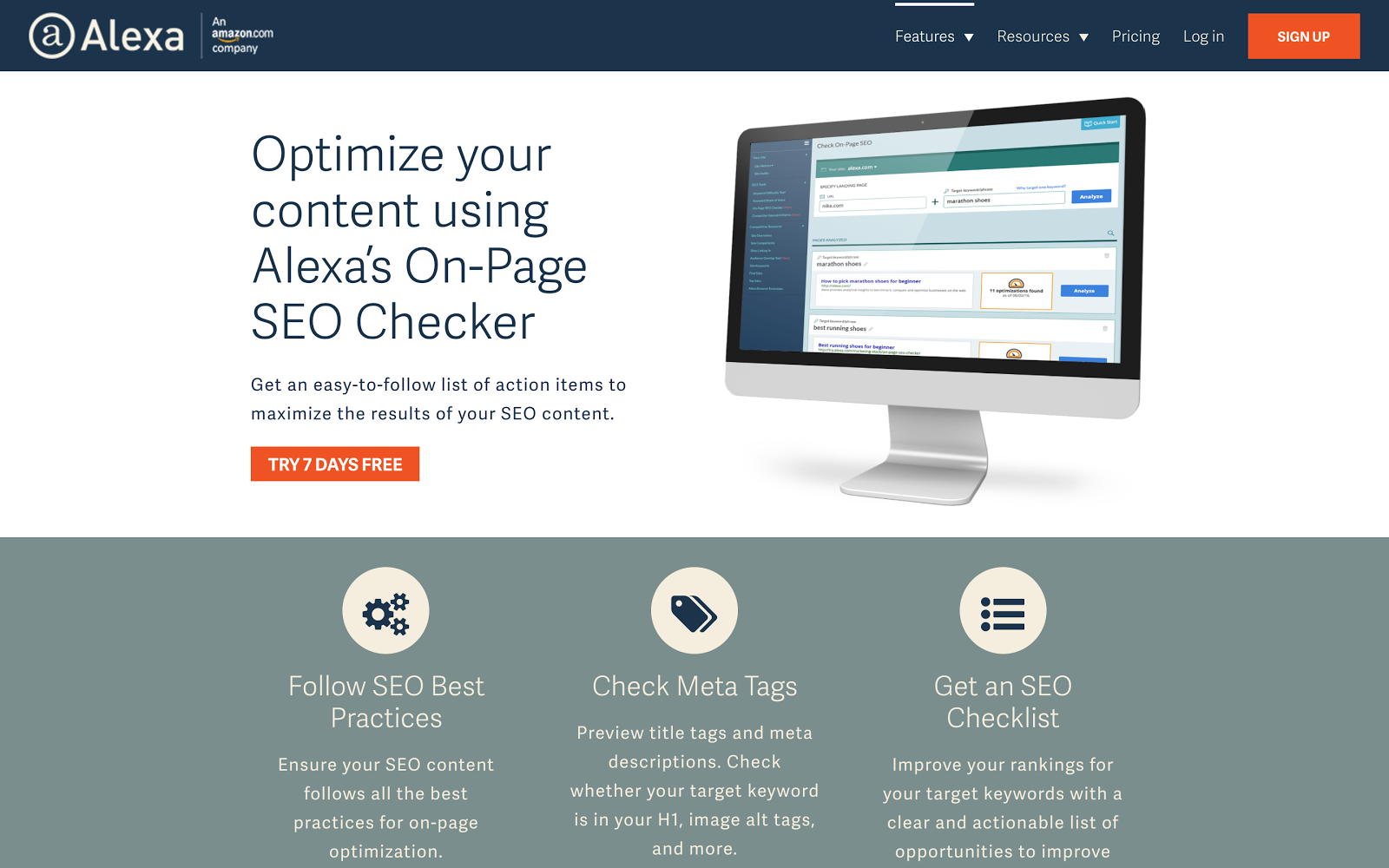
Alexa uses the “Try 7 days free” copy, which takes the pressure off the visitor. They don’t have to fully commit to using the service, and won’t be charged if they’re not happy with it:
Both Hired and Alexa use excited copy like “Get started.” Using the word “get” psychologically makes people feel as though they are getting something in return for giving you their details.
8. Measure your results
If you don’t measure the results of your landing page, you have no real way of understanding whether or not it is converting successfully.
Use Google Analytics to measure how many visitors came to your landing page and converted by giving you their data.
When looking at the effectiveness of your landing page, consider your bounce rate.
Your bounce rate is the number of people who landed on your landing page and didn’t convert.
If your bounce rate is low it could mean one of the following things:
You aren’t using the right keywords. Your keywords should be relevant to the audience you want to attract. If not, you will have a bunch of untargeted prospects coming to your site with no interest in what you’re offering.
The design on your landing page is poor. Consider how often the average person spends on your landing page. If it doesn’t follow a logical flow or is too confusing, they’re more than likely going to bounce.
9. Make sure you test
The only way to know if your attempts are working is to run tests.
A/B testing your landing page involves splitting your traffic in half, so half the traffic sees one version of the landing page and the other half sees another.
This way you will be able to make informed decisions about what does and doesn’t work.
You can compare two versions of your landing page and test different elements.
Do you have two headlines you want to use, but you aren’t sure which will work best? Use A/B testing.
Then after you’ve generated enough traffic, you’ll be able to see which led to the highest number of conversions.
With this data, you can continually improve your landing page to ensure it converts the most people.
When testing elements, don’t try and test everything all at once. If you do this, you’ll have no clear idea what you need to change and what you need to keep the same.
Instead, change a few elements at a time and keep the other elements the same as a control variable.
Conclusion
Your landing page has one job, and one job only: To convert.
So why are you not doing everything you can to encourage your visitors to take your desired action?
It all begins with planning.
But the planning begins even before you start thinking about what you will have on your landing page.
If you want it to be successful, you have to read your prospects’ minds.
Essentially, you need to know your customers really well.
Once you know them, you’ll determine what words, images, and reasoning resonate most with them.
And once you start using their own ideas on your landing pages, your conversion rates are going to increase.
But, with everything in marketing, there is no one size fits all.
Follow the best practices listed in this post and develop your understanding of your audience, and you’ll be able to create winning landing pages for all your offers.
What strategies do you use to improve your landing pages?
Por que as pessoas leem blogs de tecnologia? Você costuma ler algum blog de tecnologia? Então você investiu em uma estratégia de conteúdo, empregou ótimos criativos e publicou regularmente novas postagens no blog. Você tem tráfego chegando em seu site, está convertendo parte desse tráfego de leitor casual em cliente convertido e as coisas estão melhorando.
Mas espere: você já parou para se perguntar por que as pessoas estão lendo seu blog? Não estou falando sobre a origem dos leitores – o Google Analytics dirá isso -, mas por que eles estão chegando ao seu site.
E não, não estou falando de palavras-chave, títulos de clickbait ou estratégias de SEO que você e sua equipe implementaram para atrair cliques.
Vá mais básico: o que motiva as pessoas a ler blogs em geral e por que elas optam por ler seu blog de tecnologia especificamente?
É uma pergunta diferente e sobre a qual os profissionais de marketing de conteúdo geralmente não refletem, assumindo que as pessoas irão procurar por conteúdo e que um bom conteúdo atrairá mais desses interessados.
Mas, na verdade, é um pouco mais complicado que isso, e responder à pergunta do seu blog pode ajudar a criar um conteúdo melhor, servir os leitores com mais eficiência e manter as pessoas voltando.
Neste post, exploraremos as razões pelas quais as pessoas leem ou devem ler blogs de tecnologia – qual delas trouxe você aqui?
POR QUE AS PESSOAS LEEM BLOGS?
Pela primeira vez, os proprietários de blogs – incluindo empresas – poderiam ter uma compreensão clara dos motivos pelos quais as pessoas estavam chegando em seus sites e o que esperavam encontrar quando chegassem.
No entanto, o que não fez foi procurar classificar os leitores em nove grupos. De fato, algumas das razões pelas quais os leitores chegaram a um blog em busca de informações estavam conscientes e relacionadas ao uso da Internet, enquanto outras estavam inconscientes e relacionadas ao estilo de vida mais amplo e às premissas de vida dos leitores.
Além do mais, alguns dos motivos foram decididamente próximos (tendo algo a ver com a ação específica de buscar informações em um blog neste momento específico), enquanto outros eram mais gerais, talvez definindo os blogs como uma fonte preferida de informações sobre um assunto em comparação com fontes de mídia concorrentes.
Para os profissionais de marketing, o reconhecimento dos motivos pelos quais o leitor escolhe buscar informações em blogs e a consideração dos fatores específicos que estão direcionando os leitores para o blog especificamente é uma etapa importante no desenvolvimento, lançamento e manutenção de uma estratégia de criação de blog e conteúdo.
Analisaremos as razões pelas quais as pessoas leem os blogs de tecnologia, um por um.
1. BUSCA DE INFORMAÇÕES EM SITES DE TECNOLOGIA
Os blogs de tecnologia são atualizados regularmente, indexados rapidamente pelos mecanismos de pesquisa e geralmente mantidos pelos mestres do nicho específico em que o blog é focado. Isso faz do blog uma fonte conveniente de informações para os leitores que desejam descobrir o que está acontecendo em um determinado domínio agora, pois as informações melhores e mais recentes são apenas uma pesquisa no Google e a um clique de distância.
2. SENTIMENTOS ANTI-TRADICIONAIS DA MÍDIA
Os blogs representam uma espécie de mídia cidadã. Eles podem ser financiados por uma empresa ou ser o único meio de aumentar a receita de um blogueiro individual, mas permanecem distantes das empresas multibilionárias que são a mídia tradicional ou convencional. Quando um leitor de blog tem motivos para desconfiar das fontes tradicionais de informação, os blogs preenchem a lacuna.
3. ORIENTAÇÃO
Os blogueiros de tecnologia fazem parte da mídia cidadã, mas estão mais alinhados com a coluna editorial, que as notícias estritas e sem sentido juntam os braços da mídia tradicional. Como resultado, é provável que os blogueiros compartilhem suas opiniões livremente e alguns leitores cheguem não apenas para descobrir o que o blogueiro acredita, mas também por que eles acreditam nisso. A combinação de opinião e explicação é o condutor aqui.
4. VARIEDADE DE OPINIÃO
A blogosfera tem uma variedade de opiniões e pontos de vista que a mídia tradicional e tradicional nunca poderia oferecer. Se você quer uma opinião, leia um jornal; se você quiser todas as opiniões, leia os blogs.
Finalmente, a última razão pela qual os leitores recorrem aos blogs é quando eles têm uma consulta específica. Talvez eles estejam buscando um certo fato. Procurando informações que a Wikipedia simplesmente não poderia oferecer. Ou procurando uma opinião de especialista oferecida gratuitamente por alguém bem conhecido no campo. Seja qual for o motivo, quando um leitor tem uma consulta específica, quase sempre há um blog com uma resposta.
Então, qual dessas razões descreve por que as pessoas leem seu blog de tecnologia?
Para muitas empresas – e especialmente empresas que seguiram o conselho de consultores de SEO e especialistas em marketing de conteúdo. A tendência é imaginar que os leitores do blog cheguem estritamente a informações específicas.
Portanto, é importante desenvolver postagens de blog sobre palavras-chave, termos semânticos que aparecerão no alto das páginas de resposta dos mecanismos de pesquisa e que estejam diretamente relacionados ao negócio e ao seu domínio. As postagens do blog não são sobre criar comunidade, mas também sobre o desenvolvimento do ‘suco’ que ajudará a levar a página de negócios ao topo da santificada ‘Página Um’ do Google.
COMO ATRAIR LEITORES AOS MEU BLOG DE TECNOLOGIA?
Revise a lista acima e faça a si mesmo perguntas como:
Como posso posicionar meu blog em relação às fontes de mídia tradicionais para obter uma participação maior do público?
Como posso fornecer uma maneira de meus leitores se sentirem parte de uma comunidade?
O que fazer para incentivar a interação no meu blog e gerar discussões?
Qual é o ambiente do meu blog? É este o ambiente que funciona para o meu público?
Tenho várias vozes e problemas no blog? Preciso oferecer mais aos leitores?
Devo trazer um ângulo político para as postagens do blog que público, ou é melhor que a empresa permaneça neutra?
Ao entender todos os possíveis fatores por trás da decisão que um leitor toma para visitar seu blog, é possível elaborar uma estratégia de blog mais eficaz, fornecer o conteúdo que ele deseja e esperar e desenvolver e um público-alvo que continuará voltando dia após dia, devido ao valor que você oferece.
Parece que o marketing e a comunicação estão se tornando cada vez mais visuais. Anúncios, atualizações de mídia social e sites devem ser vistos e bombardeiam esse sentido com informações. Usar o áudio é uma maneira de romper a desordem do mundo visual A importância de usar áudio no marketing e alcançar as pessoas em outro nível, talvez mais profundo. O marketing de áudio digital é um bom ajuste para sua marca? Absolutamente.
O streaming de música, rádio online, plataformas de podcast, aplicativos e serviços estão crescendo rapidamente, com mais de três quartos dos internautas ouvindo. O áudio digital permite que os profissionais de marketing entrem na experiência auditiva, onde o conteúdo concorrente é escasso. Considere estes cenários:
É uma terça-feira de manhã e você está andando rapidamente por uma calçada da cidade a caminho do escritório. Sua cabeça está abaixada, seus AirPods estão presentes e você está atualizando o podcas.
É uma tarde de sábado e você finalmente está indo para a limpeza. Você veste roupas confortáveis, sai com busca dos materiais de limpeza e pede para alguém tocar uma lista de reprodução. Você começa a aspirar o chão, cantarolando junto.
Nas duas situações, você não está exposto a muito, se estiver, é o conteúdo além do que está em seus ouvidos. Você tem um objetivo específico e está usando o áudio digital como seu único companheiro de conteúdo. Você é multitarefa, mas não é bombardeado com mensagens de marketing simultâneas.
Quando você anuncia em canais de áudio digital, alcança pessoas que estão fazendo e pensando coisas que elas não fazem ou pensam em canais de marketing mais desorganizados. Sua marca recebe uma parcela bastante exclusiva de atenção e atenção, alcançando lugares e pessoas que as telas não conseguem.
O AÚDIO DIGITAL É MÓVEL
As pessoas estão gastando cada vez mais tempo usando dispositivos móveis em relação a qualquer outro tipo de dispositivo. E o áudio se encaixa facilmente na maioria das atividades em movimento. Sessenta e cinco por cento dos ouvintes de podcast usam dispositivos móveis para ouvir áudio em desktops e alto-falantes inteligentes (embora o uso de alto-falantes inteligentes esteja aumentando).
Não é de surpreender que o áudio represente a maior parte do tempo diário gasto com aplicativos móveis. O adulto médio passa três horas por dia usando aplicativos móveis, dos quais 53 minutos são gastos com aplicativos de áudio.
A audiência de áudio digital está superando o rádio tradicional, aumentando a ascensão do áudio móvel. O relatório de publicidade de áudio digital de 2019 da eMarketer mostra que o tempo que os adultos ouvem áudio digital será maior que o rádio tradicional pela primeira vez em 2020 – uma diferença de 4,4 minutos. O áudio digital agora tem maior valor para os consumidores e, portanto, maior valor para os profissionais de marketing.
OUVIR UM ÁUDIO LEVA À COMPRA
Os ouvintes de áudio digital são particularmente atenciosos e leais – especialmente os ouvintes de podcast.
O áudio se presta a multitarefa (direção, limpeza, deslocamento, exercício etc.), mas os podcasts requerem um certo nível de concentração. Os ouvintes investidos sintonizam todos os episódios, uma lealdade transferida para produtos ou serviços anunciados.
Uma pesquisa descobriu que 60% dos ouvintes de podcast entrevistados dizem que compraram algo depois de ouvir o anúncio em um podcast. A pesquisa também descobriu que os anúncios de podcast obtêm uma recordação de marca 4,4 vezes melhor do que os anúncios em outras plataformas digitais.
A RELEVÂNCIA É GARANTIDA ATRAVÉS DO ÁUDIO MARKETING
O marketing de áudio digital é altamente mensurável e direcionado. Além de usar critérios de segmentação padrão, como dados demográficos, local e dispositivo, os profissionais de marketing podem confiar na relevância contextual de seus anúncios. Você pode garantir que a colocação de um anúncio em um canal de áudio alinhado à marca atinja um público qualificado com interesses e necessidades relevantes.
O áudio digital apresenta oportunidades de marketing pagas, próprias e ganhas para as marcas. Mas, diferentemente da maioria dos canais, os anúncios são exclusivos para o momento. Você nunca ouvirá dois anúncios de áudio ao mesmo tempo! Mas se você estiver digitalizando o Facebook, com certeza o fará. Então você sabe que não terá que lutar pelos ouvidos dos ouvintes. Os formatos de anúncio mais comuns são:
PONTOS GRAVADOS
Esses anúncios são pré-gravados para exibição em uma variedade de plataformas de áudio digital ou específicos para um canal, programa ou lista de reprodução e podem incluir um visual clicável para telas digitais. Como os anúncios publicitários de rádio tradicionais, eles têm comprimentos padrão como 15, 30 ou 60 segundos e podem aparecer em transmissões de música, podcasts ou rádio online.
ANÚNCIOS NATIVOS
Principalmente para podcasts, os anúncios de áudio nativos são lidos por um host de podcast para endossar uma marca, produto ou serviço. Eles podem ter vários comprimentos e são os tipos menos interruptivos de anúncios de podcast, alavancando a personalidade do host.
CANAIS OU LISTAS DE REPRODUÇÃO DE ÁUDIO EM MARCAS
Aparecem nos serviços de streaming de música, onde canais e listas de reprodução podem ser marcados para um anunciante por meio de promoções de áudio e recursos visuais na tela.
PODCASTS COM MARCAS OU ÁUDIO PATROCINADO
Existem várias maneiras de marcar ou patrocinar um podcast. Os anunciantes podem formar parcerias com hosts de podcast para criar uma série de podcasts ou fazer parceria com um podcast existente. Isso ajuda a criar percepção positiva da marca por meio da associação com públicos leais e relevantes.
Por fim, considere a voz da sua marca – literal e figurativamente – ao lado de suas metas de marketing para escolher o melhor formato para sua marca. Qual bloco de anúncios ou personalidade do host comunicará melhor sua mensagem? O que você quer que os ouvintes pensem, sintam ou façam? Analise o público e o conteúdo de cada canal para garantir que você alcance as pessoas certas no contexto certo.
Então, sintonize o marketing digital. Está ficando cada vez mais alto.
They actually have tons of other tools. Some you may have heard of, but I bet you don’t use them.
And today I am going to show you how you can build links using Google Alerts.
What is Google Alerts?
As the saying goes, if it isn’t on Google, it doesn’t exist.
Google is the most popular search engine in the world. Their database contains hundreds of billions of web pages and is over 100,000,000 gigabytes in size.
Because of their massive size, they are able to crawl web pages more frequently than any SEO tool including my own, Ubersuggest. This is precisely why you want to start using Google Alerts to build links.
So, what is Google Alerts?
As I mentioned above, they have a bigger database of web pages than any other link building or SEO tool. So, you’ll want to use their database to find easy link opportunities and ideally without wasting time digging through billions or even thousands of web pages.
Google Alerts allows you to create notifications on any subject, topic, or keyword.
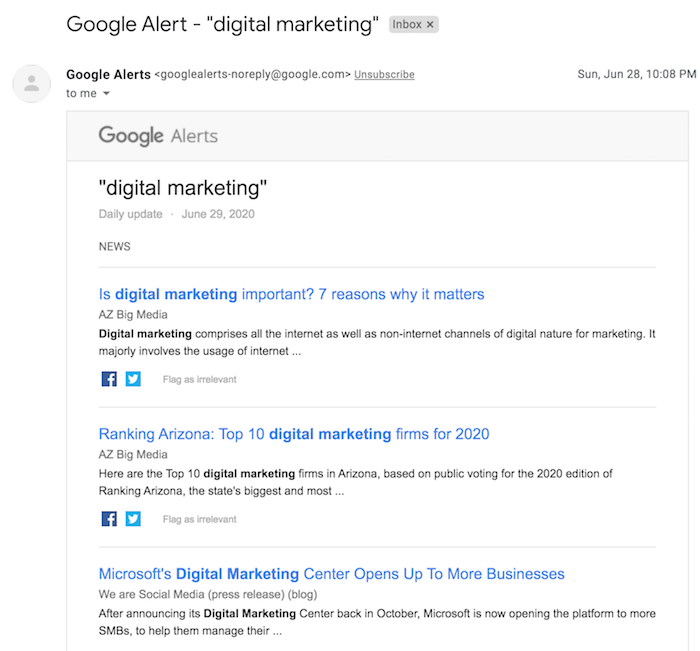
So, when a new web page talks about anything that could be an easy link opportunity, you’ll get notified in an email.
Just like this one…
So, let’s set it all up step by step so you can get some backlinks.
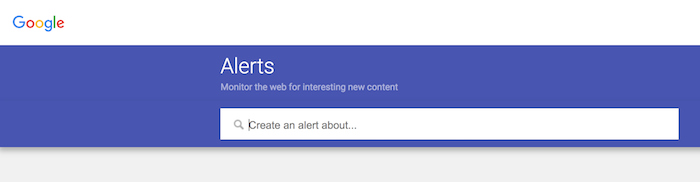
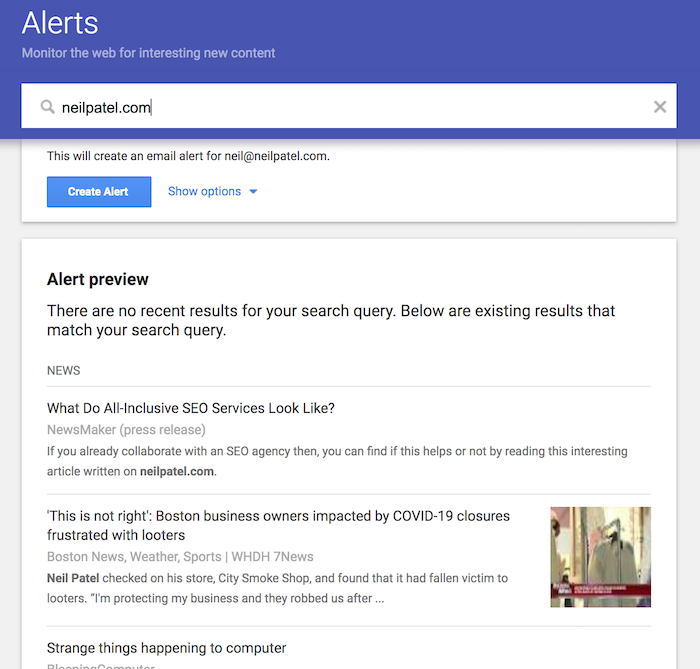
You’ll see a screen that looks like this (make sure you sign in at the top right).
I want you to type in your domain name without the www or the https part.
In my case, I would type in: neilpatel.com
You may see an alert preview like the one above, but if you have a newer site you probably won’t see any results, which is fine.
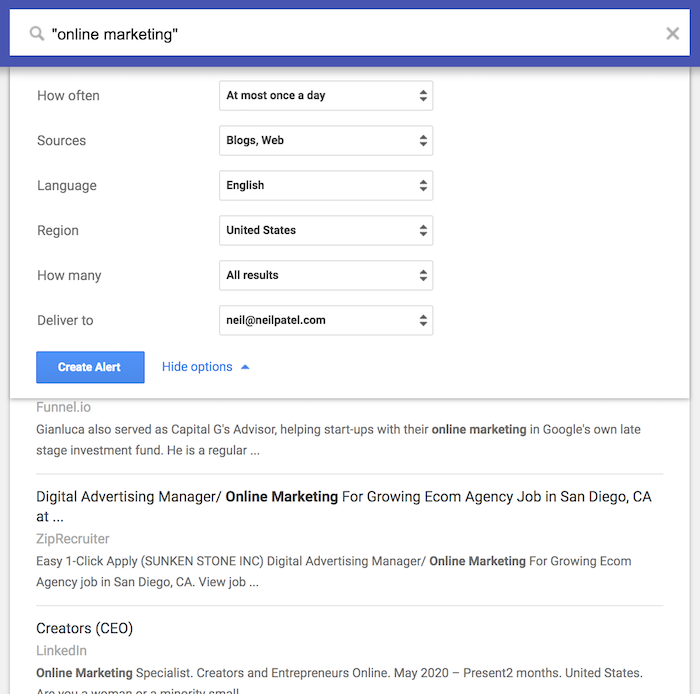
Then I want you to click on the “Show Options” link next to the “Create Alert” button.
Your settings should match mine:
How often – at most once a day
Sources – Blogs, Web (select those 2 options, you don’t want news as an option as it tends to create more irrelevant results and we’ve found that it is harder to get news sites to link back to you)
Language – English (or the language you are targeting)
Region – any region (or you can select the country you are targeting although I recommend picking “any region”)
How many – all results
Deliver to – should be your email.
And then click “Create Alert.”
Up to once a day, you’ll get an email with a list of pages that mentions your website or domain.
I want you to repeat the process and create an alert for the following items:
Your domain – you should have just done this.
Brand name – in my case I would create an alert for “Neil Patel.”
Product names – if you are selling any services or products you can create an alert around that. In my case, I would create an alert for “Ubersuggest.”
Industry terms – create alerts for anything related to your industry. When people are talking about your space, it is an easy link opportunity. In my case, I would create alerts for the terms: digital marketing, online marketing, and SEO.
Your email address – create an alert anytime someone gives out your email. Again, another easy link opportunity.
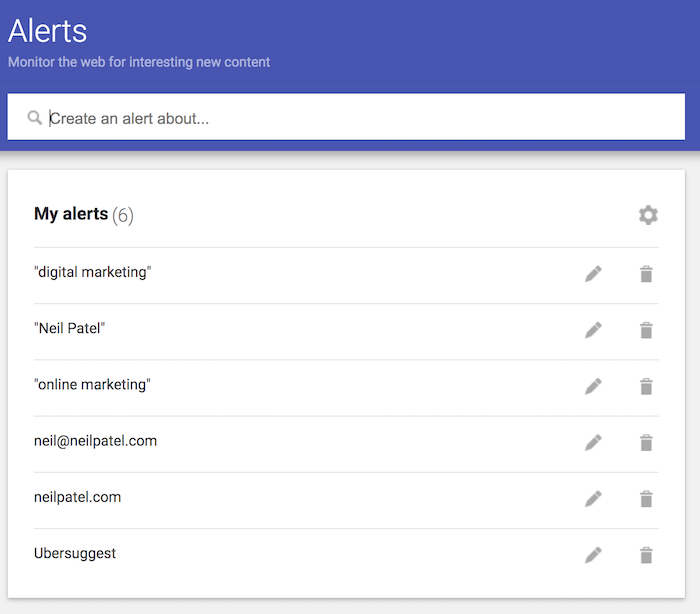
Here’s what mine looks like:
You’ll also notice for all of my two-word phrases I have quotation marks around them.
For example, I would not create an alert for: Neil Patel
But, I would create an alert for: “Neil Patel”
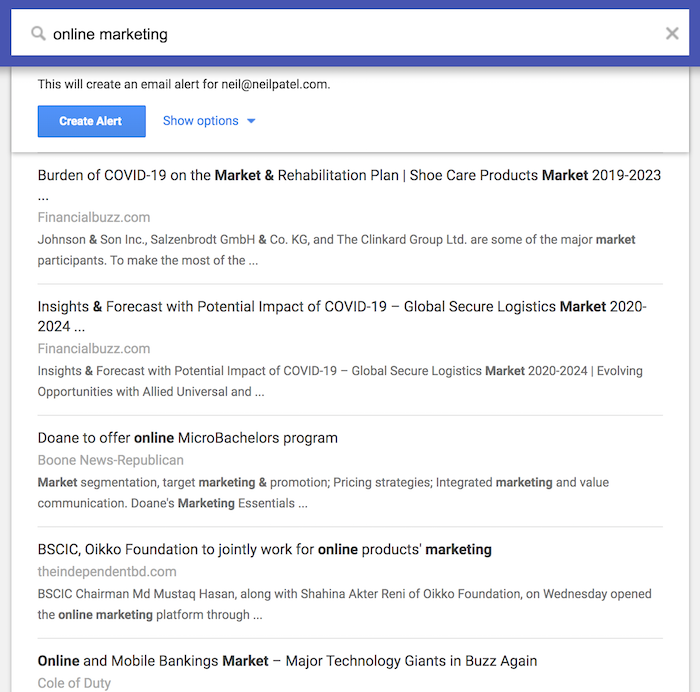
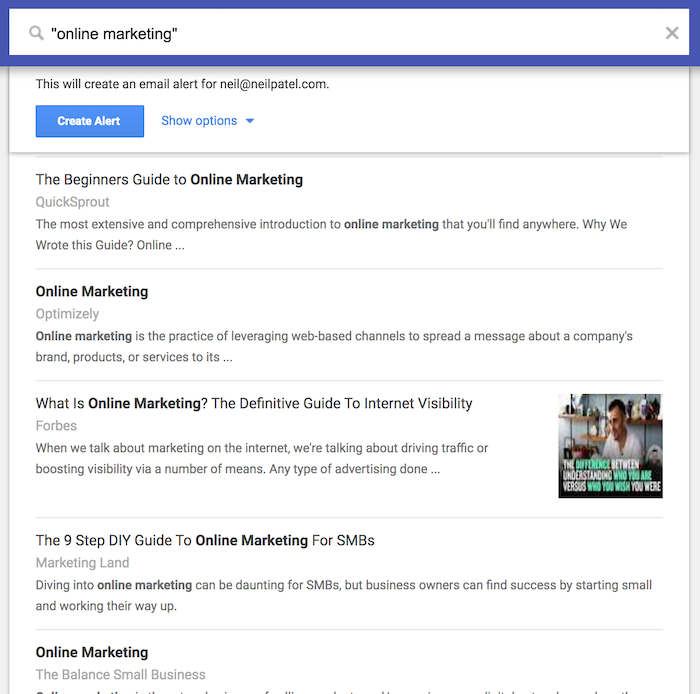
The reason being is that alerts for two-word phrases without quotes aren’t as relevant. For example, here are some alerts from the term: online marketing.
When I use quotes, here are the results.
See the difference?
Getting links
Now that you have alerts set up, it is time to get links.
Keep in mind that when you get an alert email, someone could have already linked to you. So, not every alert will be a link building opportunity, but many will be.
Typically, more than half will be opportunities.
Depending on the alert type, some will be easier than others. So, let’s go over how to convert each opportunity into a link.
Your domain
You’ll find that a good portion of the mentions of your domain will contain a link back to your site.
For those, you don’t have to do anything as you’ve already got a link. 🙂
For the ones that aren’t linking to you, I want you to send the following email to the webmaster…
Subject: Did you make a mistake?
Hey [insert first name],
First off, I just wanted to say thanks for mentioning [insert your domain] in this article [insert a link to the URL that mentions your domain].
I know you are busy so I will just cut to the chase.
Would you mind hotlinking my domain to my website? I know it doesn’t seem like a big deal, but that extra traffic really helps small companies like mine.
Cheers,
[insert your name]
PS:Let me know if I can do anything for you.
Brand name
When it comes to brand names, it is a 50/50 shot. Roughly half the people will link to you when they mention your brand and the other half won’t.
For the ones that didn’t, send them this email:
Subject: You forgot to do this
Hey [insert first name],
I’m flattered.
Thank you for mentioning [insert your brand name] in your article on [insert the title of their article].
[insert the URL of their article]
You really made my day with that.
Again, thank you!
I feel bad doing this because you already mentioned us, but it would mean the world to me if you also linked our name to our site.
Would you mind doing that?
Sorry to bug you.
[insert your name]
PS:Let me know if I can do anything for you.
Product names
With product names, usually 70% to 80% of the websites will be linking back to you and the rest not. For the ones that don’t, send them an email similar to this:
Subject: Did you mean to do this?
Hey [insert their first name],
I just wanted to take a minute to tell you how much I appreciate that you mentioned [insert your brand name] here [insert the URL of the webpage that mentions your product].
Seriously, thank you!
Now, I feel bad doing this, but would you mind hotlinking [insert your product name] to this page on our website where people can find the product [insert the URL on your site that covers the product]?
Sorry to bug you.
And again, thank you for mentioning us. It really means a lot.
[insert your name]
PS:Let me know if I can do anything for you.
Your email address
Now this one is rare as most people won’t be publishing your email address.
And when they do, they usually aren’t linking to you.
If you try to get them to link the email address, you will find it hard. But what’s easier is to get them to remove your email address and link to your contact page instead.
Here’s the email template I use for this.
Subject: Privacy issue
Hey [insert their first name],
I noticed you mentioned our email address, [insert your email address], on this page [insert the page they mentioned your email on].
Would you mind mentioning and linking to our contact page instead [insert your contact page URL]?
For privacy reasons, I would rather have people get in touch with us through that page instead of our email.
Thanks for your time.
[insert your name]
You also notice that in this template I didn’t include the PS at the bottom. The PS typically helps boost your success ratio, but when it comes to this email, you want to be a bit more firm as it is related to your privacy.
You ideally want the link and fewer people sharing your email because then you’ll have to deal with a ton of spam messages.
Industry terms
In almost all cases, alerts that contain industry terms won’t be linking to you. And this group will also be the largest number of results you get with each alert email.
You’ll have to go through each alert and look at the context of the web page.
If they are talking about something that you have already covered on your website and did more in-depth than they have, there is a good chance you can convince them to link to you.
For example, if there is an article about SEO and they mention how you need to build links, but they don’t go into how to build links, I would email the site owner pointing to this article as it breaks down how to build links.
Here is the type of email I would send:
Subject: Some feedback for you
Hey [insert their first name],
Love your article on [insert the topic of their article] [insert the URL of their article].
I just have one piece of feedback for you (hope you don’t get offended), but you mention [insert the subject they mention that you go more in-depth on within your own site], but you didn’t go too in-depth on it.
I think if you adjusted that it would provide a lot more value to your readers.
Or if you don’t have the time to, I already have an article on it here [insert the URL on your site where you go in-depth on that topic] that you could just link to.
Let me know your thoughts.
[insert your name]
PS:Let me know if I can do anything for you.
How do I get in touch?
Now that you know what kind of emails to send depending on the alert you receive, you’ll have to, of course, get in touch with the site owner.
So how do you find their email address?
Well, the simplest way is to go to their contact page and see if their email is there or if they have a contact form.
You can also check out their terms of service or privacy policy.
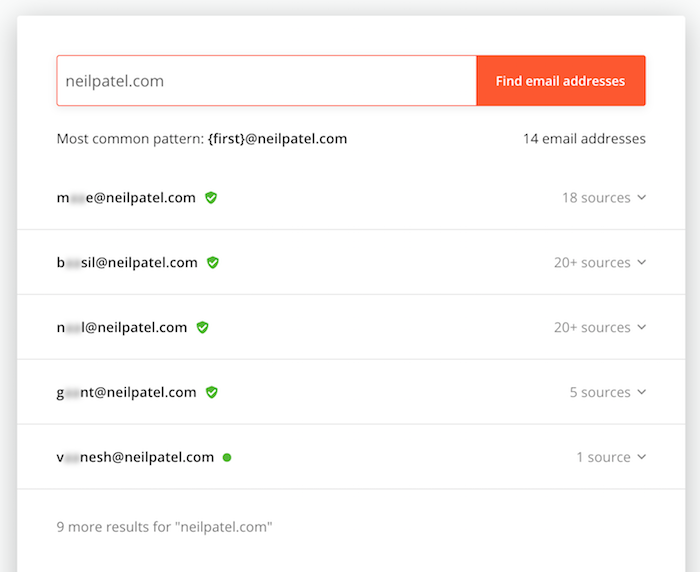
Another option is to use tools like Hunter. Just type in a domain name into Hunter and you’ll see a list of people you can contact.
Their free plan allows 50 requests per month, which should be enough to get you started.
Conclusion
Google Alerts is an easy way to build links so I would start with that.
What’s beautiful about it is that you’ll get notified of opportunities. This will save you a lot of time.
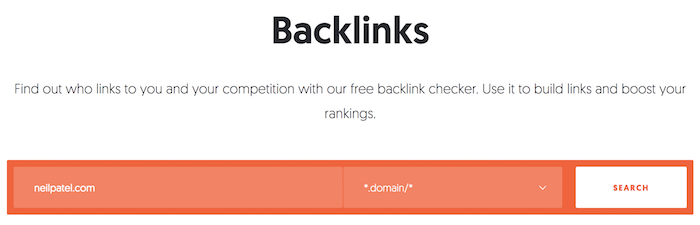
And if you find yourself with a bit of extra time, I recommend one more strategy to build links.
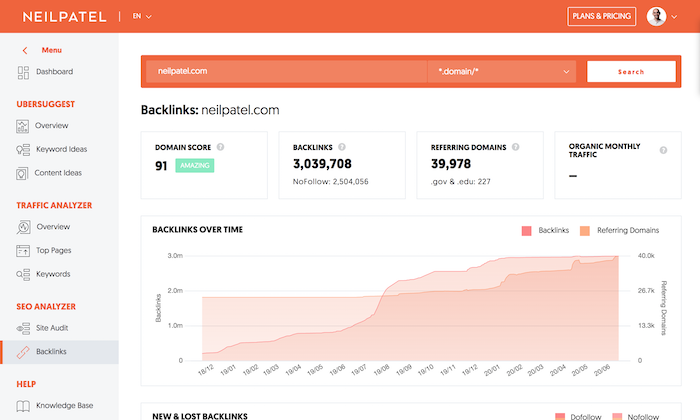
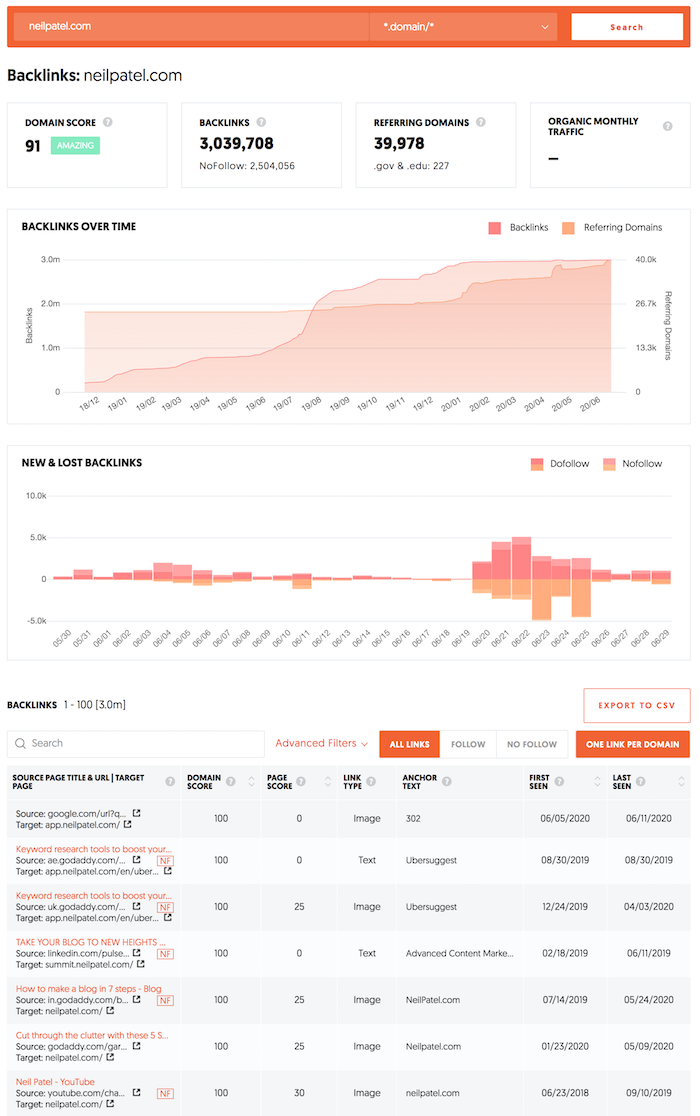
Once you hit “search” you’ll see a report that looks something like this:
These are all of the websites linking to your competition. What’s interesting about this list is that it is sorted.
The results at the top have more authority, in which they typically boost SEO rankings more than the ones at the bottom of the list.
You’ll want to go through the list, click on each site, and see if it makes sense to reach out to that website and ask them to link to you.
Typically, if you have similar content to your competition that is more thorough, it’s possible to convince someone to link to you. You’ll have to send them emails like the one below…
Hey [insert their first name],
Question for you…
How do you think it makes you look to your readers when you link to another site that doesn’t really help them?
It kind of makes you look bad and maybe even lose a little bit of trust with your readers, right?
In this article [insert the URL on their site], you link out to [insert the competition’s URL].
The article you are linking to doesn’t cover [insert the areas the competition missed].
I actually have an article [insert your article URL] that covers [insert what you cover that the competition doesn’t and why it benefits readers more].
If you aren’t interested in linking to us no worries. I just know that you care about your readers and you want to do the best for them.
Cheers,
[insert your name]
PS:Let me know if I can do anything for you.
If you follow the steps above, you’ll start building links.
It isn’t that hard and you can do it. You just have to be willing to put in the time and not get discouraged if you send out a handful of emails and no one links back to you.
Just think of your email as a sales pitch and it may not be perfect the first time… so you may have to modify and adjust it.
If you have any questions on the steps or are confused about anything, just leave a comment below.
Acredito que o guest post é a estratégia mais importante para aumentar a plataforma e os leitores do blog. Permita-me explicar… Antes de tudo, vamos definir nossos termos. “GUEST POST” significa escrever e publicar um artigo no site ou blog de outra pessoa. É uma ótima maneira de se conectar com novos leitores e divulgar seu nome.
Mas, durante muito tempo, negligenciamos essa disciplina essencial para o crescimento de um blog popular. Há muitas razões pelas quais o guest post é uma estratégia tão importante para todos os blogueiros criarem sua influência on-line:
O QUE É GUEST POST?
Postagem de convidado (ou guest post) refere-se ao processo de escrever conteúdo com o objetivo de ser publicado no blog de outra pessoa. Isso pode significar que você escreveu a postagem para o blog de outra empresa, ou eles escreveram uma para aparecer em seu blog. Quando você escreve algo em seu próprio blog, é conhecido como um post. O que faz de uma publicação um “guest post”, então, é que ela é apresentada por uma empresa que compartilha algumas semelhanças com a sua.
O guest post é importante por alguns dos principais motivos. Por um lado, os posts de convidados são ferramentas extremamente valiosas para o marketing de reputação e a construção de comunidades em seu campo. Eles podem mencionar sua empresa em sites populares relevantes, bem como ocupar resultados de consultas de pesquisa de marca.
A outra e talvez mais importante razão para a postagem de convidados, no entanto, é usá-las para incorporar backlinks. Uma parte importante do marketing, os backlinks podem obter mais visibilidade e engajamento do seu negócio quando feitos corretamente. Você deseja que os backlinks sejam naturais, pois não são forçados e são relevantes para os produtos, soluções ou serviços da sua empresa.
Os melhores backlinks são obtidos de empresas semelhantes à sua, respeitáveis e com muitos seguidores. O guest post, portanto, é feito principalmente para divulgar seus negócios e também para obter um link para uma de suas propriedades da web (por exemplo, o site da empresa ou a página de mídia social) de uma fonte respeitada.
Pode parecer fácil, mas o guest post é mais do que apenas digitar algumas centenas de palavras sobre um tópico relacionado ao seu negócio. A maneira como um guest post é criado e executado pode fazer toda a diferença na maneira como sua empresa é vista pelos clientes em potencial. Algumas coisas importantes a serem lembradas sobre o guest post são:
As publicações dos visitantes DEVEM ser bem escritas. Se sua postagem de convidado não for bem escrita, é provável que você e sua empresa não obtenham muita credibilidade. Uma voz forte, boa gramática e fácil legibilidade percorrem um longo caminho; portanto, lembre-se disso ao criar e enviar suas postagens de convidados. Portanto, certifique-se de ler sua postagem de convidado em silêncio ou em voz alta. Fazer isso garante que você não cometeu nenhum erro e que suas palavras fluem bem e fazem sentido.
Além disso, peça a um editor para revisar seu guest post. Um erro pode fazer com que sua empresa pareça desleixada, o que pode resultar em perda de credibilidade, baixo crescimento e menor envolvimento entre usuários e potenciais clientes em geral. As publicações de convidados devem sempre permanecer no tópico
Ao postar comentários, sempre mantenha o tópico. Os guest post geralmente são sobre um tópico específico relacionado aos seus negócios e produtos ou serviços. Verifique se o que você está escrevendo é relevante para quem e qual é o seu negócio. Vincule o tópico de volta ao seu negócio, mostrando como seu produto ou serviço pode resolver um problema comum que seus leitores podem ter.
Ficar fora do tópico apenas confunde ou aborrece os seus leitores, o que significa que eles provavelmente sairão da página sem explorar mais sua empresa ou a empresa pela qual seu convidado está postando.
A POSTAGEM DE CONVIDADOS CRIA RELACIONAMENTOS
Os blogueiros precisam de um bom conteúdo. Você construirá relacionamentos com outros blogueiros. Os blogueiros representam uma grande porcentagem de conversas acontecendo na Internet, especialmente em sites de mídia social como Facebook e Twitter. Eles podem ser tremendamente influentes. O que os torna bons amigos para se ter.
Ao fazer amizade com outros blogueiros por meio do guest post, você aumentará sua influência no campo das mídias sociais, o que acabará por levar a mais assinantes de blog. O guest post é excelente para os mecanismos de pesquisa. O blogueiro anfitrião deve incluir um link para o seu blog na postagem em algum lugar (geralmente no início ou no final).
Com o tempo, esses backlinks aumentarão o valor do seu blog para os mecanismos de pesquisa, facilitando a localização do seu conteúdo via Google, Yahoo, Bing e outros.
O GUEST POST TE APRESENTA PARA NOVAS PESSOAS
Talvez a melhor parte da postagem de visitantes seja que ela permite que você entre em uma comunidade já estabelecida e compartilhe sua mensagem. Ele permite que você se conecte com novas pessoas, o que pode beneficiar você, se você fizer o que é certo.
Se você estiver agregando valor à discussão, verá que, ao longo do tempo, isso se converte em mais leitores, fãs e seguidores. Por outro lado, se tudo o que você está fazendo é pedir ou vender, você pode acabar famoso, mas com uma reputação que não deseja.
E EM SEU SITE?
Também sou fã de permitir que outras pessoas publiquem posts em nosso próprio site de tempos em tempos. Você também deve oferecer postagens de convidados em seu blog (se ainda não o fez).
Se você está pedindo oportunidades para postar nos blogs de outras pessoas, isso faz sentido. Permite que o relacionamento que você desenvolveu com o blogueiro anfitrião seja mútuo.
Alguns blogueiros até escrevem sobre o seu guest post e o vinculam a partir de seu próprio blog (oferecendo um ótimo ponto de tráfego).
Embora nem todo mundo faça isso, não é uma má ideia. No entanto, isso é importante: se você tiver que escolher entre levar pessoas para postar como convidado em seu site ou postar em outro lugar, faça o último. É sempre melhor divulgar seu nome em novas comunidades.